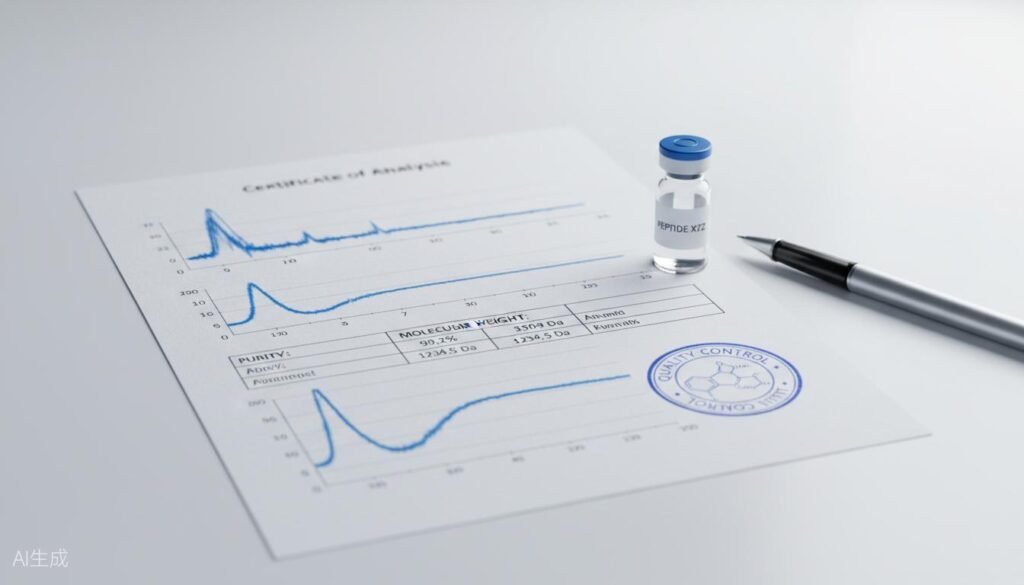
A Certificate of Analysis (COA) is the single most important document that accompanies any research-grade peptide. It is your independent verification that the compound in your vial matches what the label claims.
Key Sections to Review
1. Product Identification
- Product Name — Should exactly match your order.
- Batch/Lot Number — Unique identifier for traceability.
- CAS Number — Chemical Abstracts Service registry number.
2. Purity Analysis (HPLC)
- Method — Reverse-phase HPLC is the industry standard.
- Area % — Peak area percentage. Research-grade should be 98%+.
- Chromatogram — Visual showing target peak separated from impurities.
3. Identity Confirmation (Mass Spec)
- Molecular Weight — Must match theoretical within ±1.0 Da.
- Sequence Confirmation — MS/MS fragmentation must match expected sequence.
Red Flags to Watch For
- No batch-specific lot number
- Generic COA not tied to your specific batch
- Missing molecular weight confirmation
- No independent laboratory name or signature
Every CoreVionRX order ships with a batch-specific COA from an independent ISO-accredited laboratory.