How to Reconstitute Research Peptides: A Complete Laboratory Guide
When you buy research peptides online, proper reconstitution is critical to maintaining compound integrity. At CoreVionRX, every peptide ships as sterile, lyophilized (freeze-dried) powder — the gold standard for long-term stability. This guide walks laboratory professionals through the exact steps for safe, effective reconstitution.
What You Will Need
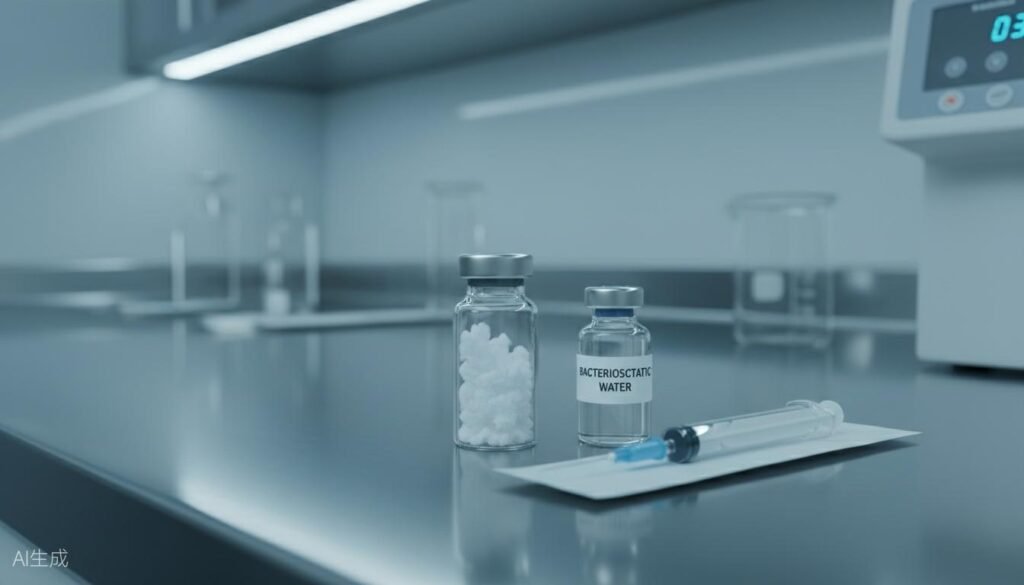
- Sterile bacteriostatic water (0.9% benzyl alcohol) — available in our accessory catalog
- Sterile syringe (1mL insulin syringe recommended)
- Alcohol swabs for vial tops
- A clean, certified laboratory environment
Step-by-Step Reconstitution Protocol
Step 1: Preparation
Allow the lyophilized vial to reach room temperature before opening. Cold vials can cause condensation that affects concentration calculations. Swab the rubber stopper with an alcohol pad and let it dry for 30 seconds.
Step 2: Calculate Your Dilution
Use our Peptide Calculator to determine the exact volume of bacteriostatic water needed. Common ratios range from 1-2mL per 5-10mg of peptide, depending on your research protocol’s target concentration.
Step 3: Inject Water Slowly
This is the most critical step. Draw your calculated volume of bacteriostatic water into the syringe. Inject the water slowly down the inside wall of the vial — never spray it directly onto the powder. Direct contact can cause denaturation of sensitive peptide bonds.
Step 4: Allow Natural Dissolution
Do not shake, swirl aggressively, or vortex the vial. Simply place it upright and allow 2-3 minutes for the lyophilized powder to dissolve naturally. Gentle rotation of the vial (no shaking) can help if the powder is slow to dissolve. The solution should be clear; cloudiness indicates improper handling.
Step 5: Storage
Once reconstituted, store at 2-8°C (refrigerated) and use within 30 days for optimal stability. Lyophilized powder stored at -20°C remains stable for 24+ months. Never freeze a reconstituted solution — this destroys peptide structure.
Peptide-Specific Notes
BPC-157: Highly stable once reconstituted. Standard concentration: 2mg/mL in 2.5mL bacteriostatic water.
TB-500: Reconstitute with 2mL for 2.5mg/mL concentration. Allow extra time for full dissolution.
MOTS-c: Higher dose (40mg) requires more volume — typically 4mL for 10mg/mL concentration.
Semax: Reconstitute with 1mL for 10mg/mL. Handle gently — heptapeptides are structurally sensitive.
GHK-Cu: 100mg bulk vial — reconstitute with 5-10mL depending on your dosing protocol.
Common Mistakes to Avoid
- Injecting water directly onto powder — causes localized denaturation
- Shaking the vial — introduces mechanical stress to peptide bonds
- Using tap water or non-sterile diluents — contaminates your research compound
- Freezing reconstituted solution — destroys peptide structure permanently
- Using expired bacteriostatic water — benzyl alcohol degrades over time
Documentation & Traceability
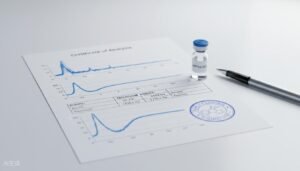
Every CoreVionRX order includes a Certificate of Analysis (COA) with batch-specific purity data. Record the batch number, reconstitution date, dilution ratio, and storage conditions in your laboratory logbook. This traceability is essential for reproducible research and publication-quality data.
Questions about your specific protocol? Contact our team — we typically respond within one business day.
All products sold by CoreVionRX are for in-vitro research and laboratory use only. Not for human or animal consumption.